



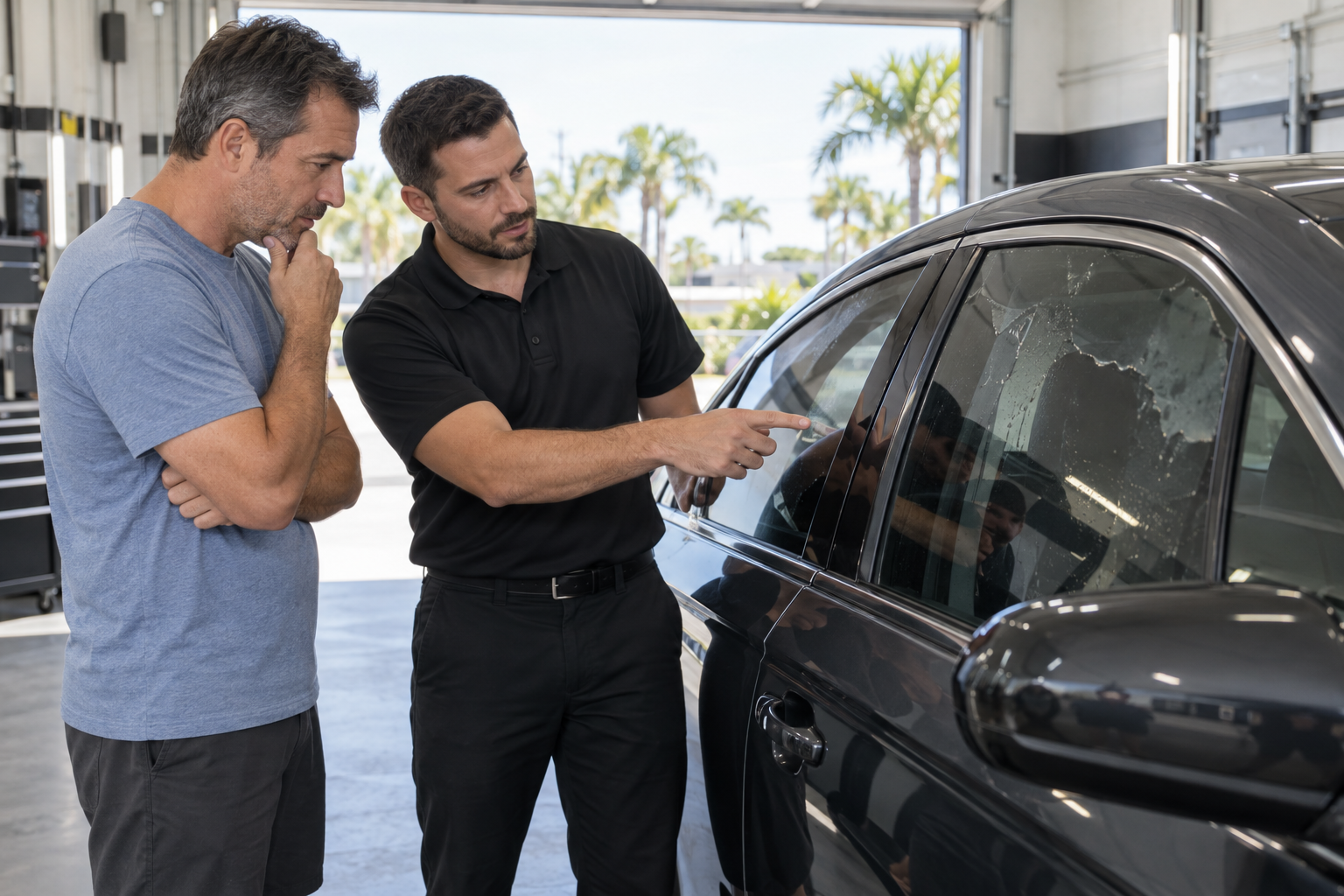
Quality automotive window tint can improve comfort, reduce glare, protect interior surfaces, and give a vehicle a cleaner appearance. However, tint film does not last forever.
In Port Charlotte and throughout Southwest Florida, intense sunlight and high interior temperatures can make aging tint more noticeable. Recognizing the warning signs helps drivers replace deteriorated film before visibility, comfort, or the condition of the glass becomes a larger concern.
Visible Changes That Indicate Aging Tint
Many signs of worn window tint can be seen from inside or outside the vehicle. Properly installed film should have a smooth, consistent appearance. Visible damage can reduce privacy, affect visibility, and limit the solar protection the tint once provided.
Bubbling or Blistering Film
Bubbles form when sections of tint separate from the glass, often because the adhesive has begun to fail. They may appear as a few raised spots before spreading across a larger portion of the window.
Bubbled tint usually cannot be restored by pressing it onto the glass. Attempting to puncture, peel, or smooth bubbles may leave creases, adhesive residue, or torn film behind.
Peeling Along the Edges
Tint may begin lifting near the top of a roll-down window, around corners, or along rear defroster lines. Repeated window movement, improper cleaning, and weakening adhesive can contribute to peeling.
Peeling film can catch on seals when a window is raised or lowered. This may cause additional tearing or folding and could eventually interfere with normal window operation.
Discoloration or a Purple Appearance
Older or lower-quality tint can fade from a dark neutral shade to purple, brown, or uneven gray. This often occurs when dyes in the film break down after extended ultraviolet exposure.
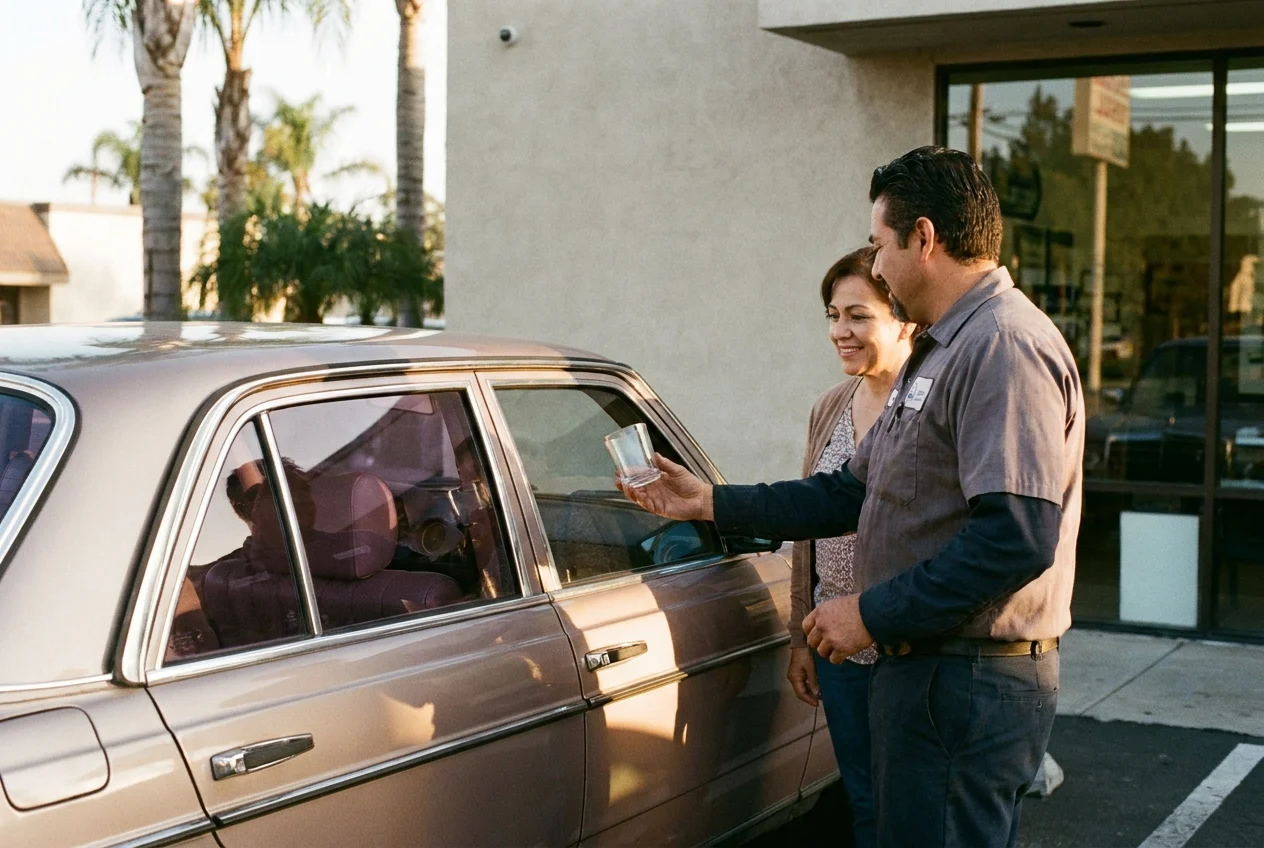
Appearance alone does not measure heat or ultraviolet rejection, but significant fading is a strong reason to have the tint evaluated and consider a modern replacement film.
Performance Problems You May Notice While Driving
Window tint can look acceptable while no longer delivering the expected comfort or clarity. Changes in cabin temperature, glare, and visibility may develop gradually, so drivers sometimes adjust to them without realizing the film has deteriorated.
Daily driving can reveal problems that are not immediately obvious from outside. This is especially important in Florida, where strong sunlight places continuous stress on automotive window film.
More Heat Inside the Cabin
If the interior feels noticeably hotter than it once did, the tint may have lost some solar control performance. Several factors affect cabin temperature, but aging or damaged film may allow more solar energy through the glass.
Effective tint reduces the heat drivers and passengers feel through the windows. When that benefit declines, the air conditioning system may need more time and energy to make the cabin comfortable.
Increased Glare or Reduced Visual Clarity
Haze, distortion, ripples, or cloudy areas can make tinted glass harder to see through. These problems may be particularly distracting during sunrise, sunset, rain, or nighttime driving, when lights can scatter across damaged film.
Clear visibility should take priority over preserving old tint. If defects obstruct the driver’s view or create distracting reflections, a professional assessment can determine whether replacement is appropriate.
Physical Damage That Can Shorten Tint Life
Not every tint problem is caused by age. Scratches, cuts, cleaning damage, and failing adhesive can make replacement necessary even when the film is relatively new.
Deep Scratches, Cuts, or Missing Film
Minor surface marks may not affect performance, but deep scratches can penetrate the film and create visible lines. Damage often occurs when sharp objects touch the window, cargo rests against the glass, or abrasive cleaning tools are used.
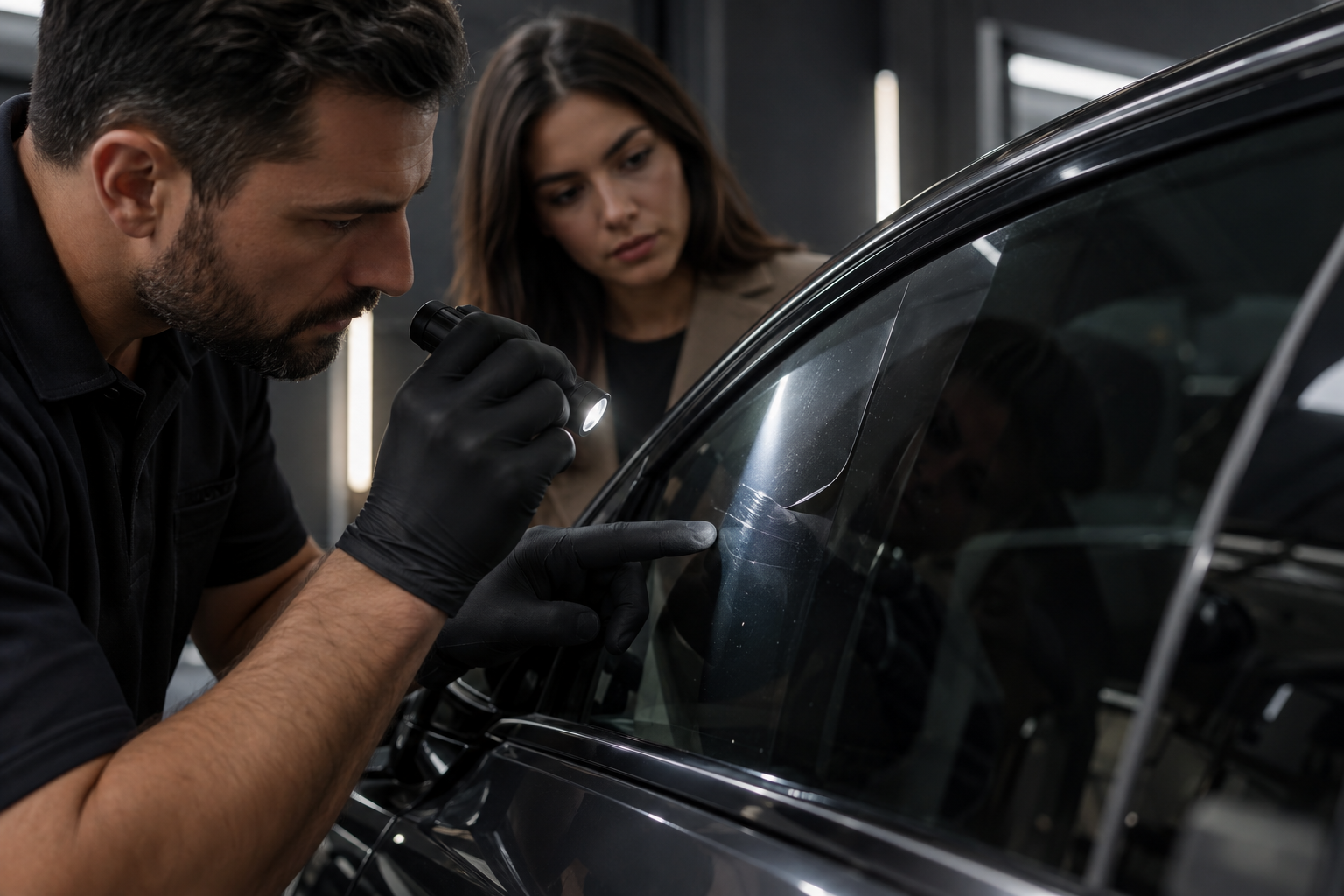
Once film has been cut or removed, it cannot be patched without noticeable seams. Replacing the film on the affected window usually provides a cleaner result and restores consistent coverage.
Cloudiness or Milky Areas
A cloudy or milky appearance can develop when the film, adhesive, or product layers deteriorate. Moisture trapped during a recent installation can temporarily create haze, but it should improve as the film cures.
Persistent haze can reduce clarity and make windows look dirty after cleaning. A professional can distinguish between normal curing moisture, contaminated glass, adhesive failure, and damage within the film.
Sticky Residue or Film Separation
Failing adhesive may create uneven patches, visible separation, or sticky residue around peeling sections. In some cases, the film may shift or wrinkle when touched.
Household solvents and scraping tools should not be used without understanding the glass. Aggressive removal can damage rear defroster lines, antennas, seals, and interior trim.
When Tint No Longer Matches Across the Vehicle
Automotive tint should look reasonably uniform from one window to another. Differences become more obvious when a window has been replaced, one piece of film has faded faster, or different products were installed at separate times.
Uneven Color or Darkness
One window may appear lighter, darker, warmer, or more reflective than the others. This mismatch affects the vehicle’s appearance and may create inconsistent glare reduction for passengers.
Replacing only the damaged window may be practical when the remaining film is in excellent condition and a close match is available. If the tint is older or heavily faded, replacing multiple windows may create a more consistent finish.
Recent Glass Replacement
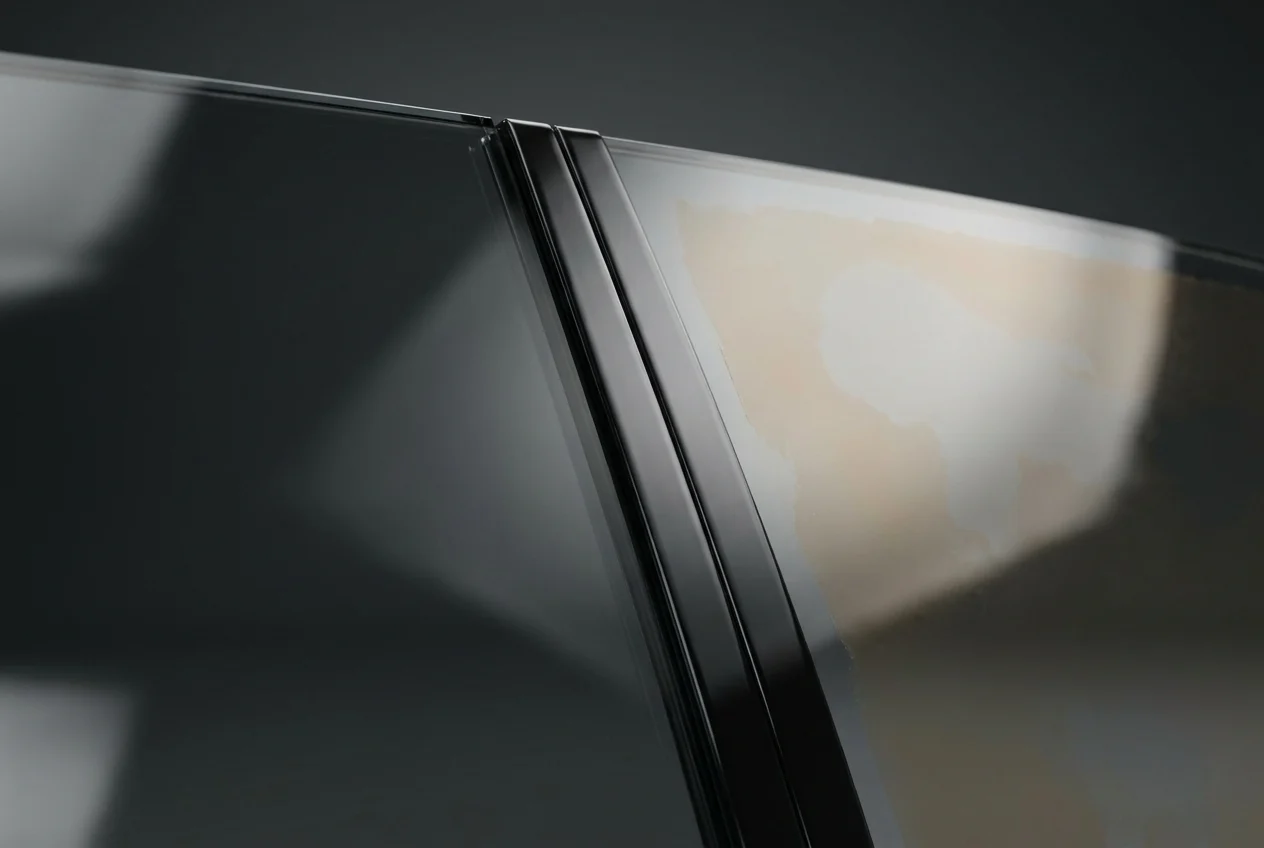
A broken side window or damaged windshield can leave a vehicle with one untinted piece of replacement glass. The new glass may need film that closely matches the existing shade and appearance.
Factory privacy glass must also be considered when matching windows. Privacy glass is colored within the glass itself and is not the same as aftermarket window film.
Safety and Legal Reasons to Replace Old Tint
Damaged or outdated tint can become more than an appearance concern. Film that obstructs the driver’s view or does not comply with current requirements may need attention regardless of its shade.
Visibility Has Become Compromised
Peeling edges, heavy bubbling, distortion, and scratches can create blind spots or distracting reflections. Problems on front side windows and rear glass can be especially disruptive when checking mirrors, changing lanes, reversing, or driving after dark.
If visibility is affected, replacement should not be delayed because the film still blocks some sunlight. Clear, predictable sightlines are essential in changing traffic and weather conditions.
The Existing Film May Be Too Dark
A used vehicle may already have tint installed, but its new owner may not know the specifications. Layered film, unusually dark glass, or an unverified installation can create uncertainty about compliance with Florida tint requirements.
Tint darkness can be measured rather than estimated by appearance. This matters because factory glass already affects the total amount of visible light passing through a window.
Should Tint Be Repaired or Fully Replaced?
Most automotive window film is installed as a single piece on each window, so isolated damage generally cannot be repaired invisibly. Trimming a peeling edge, puncturing a bubble, or adding a patch does not restore the original adhesive bond or performance.
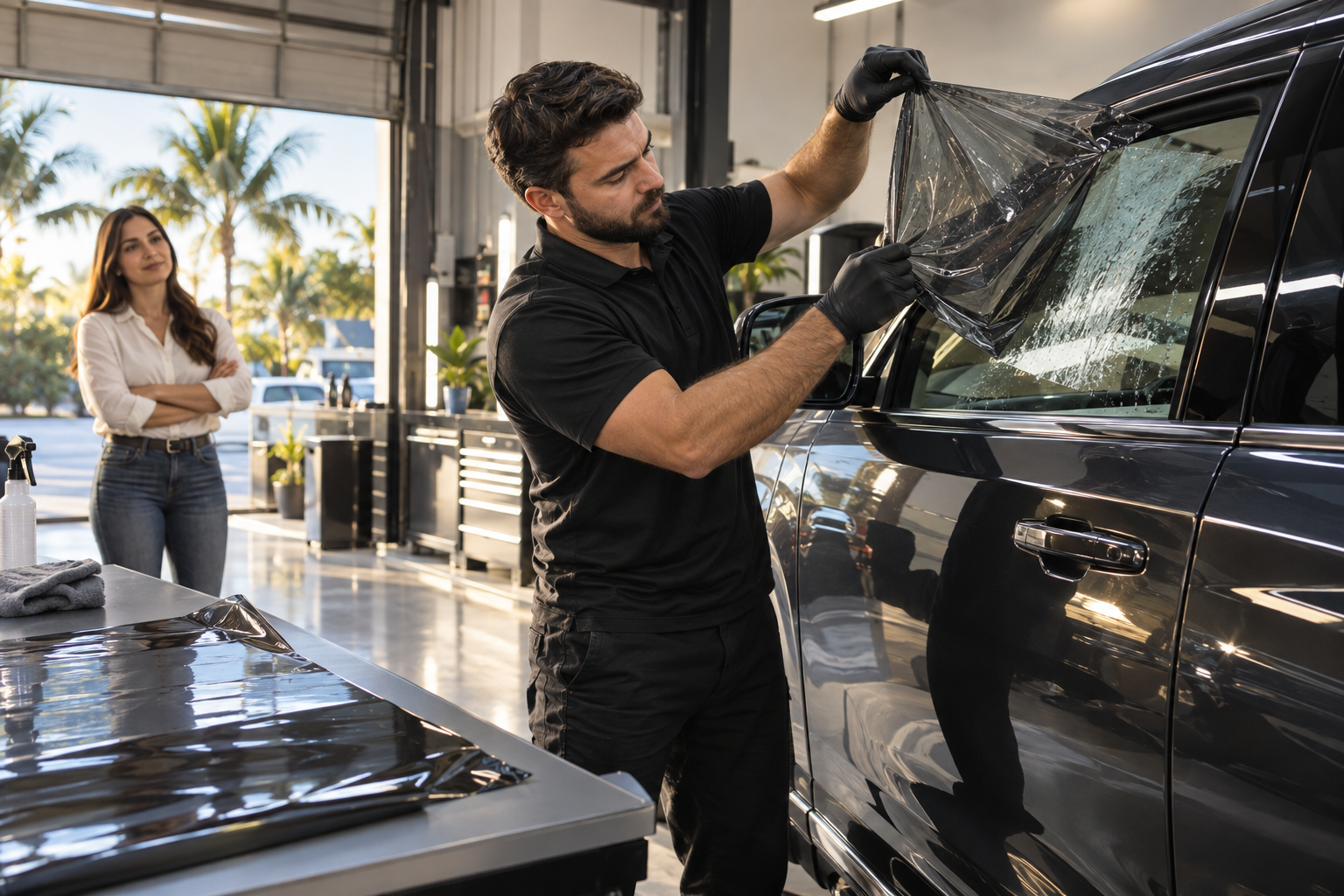
Replacement may involve one window or the entire vehicle. The right approach depends on the film’s age, extent of damage, product availability, and whether the replacement can match the remaining windows.
Replacing a Single Window
Single-window replacement can make sense when damage is limited and the rest of the tint remains clear, stable, and consistent. Examples include scratches caused by cargo, damage during glass repair, or tint removed when a side window was replaced.
A close match is easier when the original film brand, product line, shade, and installation date are known. Even with the same nominal shade, aged film may differ from new material because of fading and changes in optical appearance.
Replacing Tint Throughout the Vehicle
Full replacement may be appropriate when several windows show bubbling, discoloration, haze, or peeling. It can also help when the existing film is very old, performs poorly in Southwest Florida heat, or has an inconsistent appearance.
Installing the same film line across the applicable windows creates a balanced look and predictable performance. Modern options can provide substantial heat and ultraviolet rejection without relying only on very dark shades.
What Professional Tint Replacement Involves
Proper replacement begins with removing old material and adhesive without damaging the glass or nearby components. Additional care is required on rear windows with defroster lines and vehicles with antennas or electronics integrated into the glass.
Removing the Existing Film
The condition and type of film affect how easily it can be removed. Some film releases in large sections, while brittle or deteriorated material may break into small pieces.
Residual adhesive must then be cleaned thoroughly. Installing new tint over contamination can produce bubbles, raised areas, and poor adhesion.
Preparing and Inspecting the Glass
The glass should be cleaned and inspected before new film is applied. Scratches, chips, damaged defroster lines, and marks within the glass may become easier to see after old film is removed.
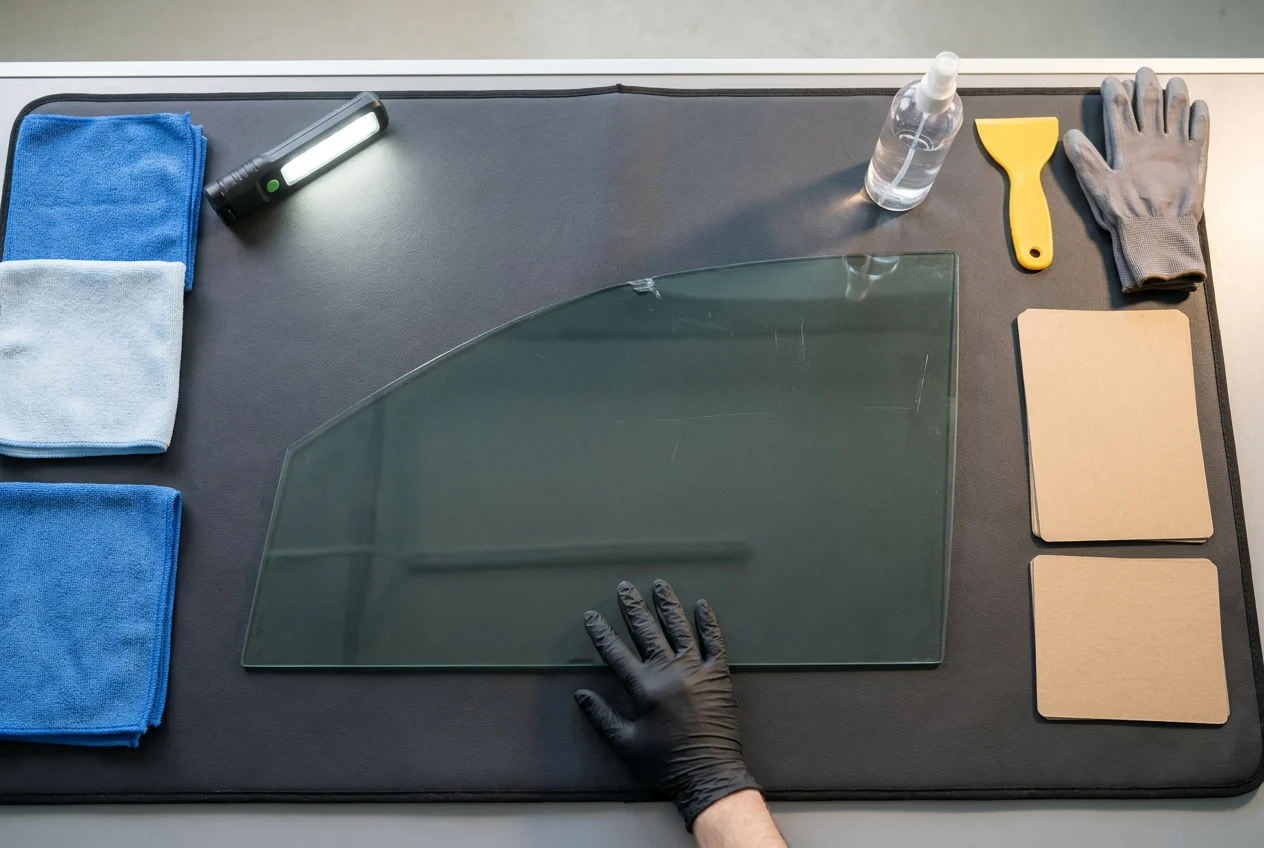
Careful preparation reduces the chance that dust, fibers, or residue will become trapped beneath the replacement film. A controlled installation environment supports a smoother final appearance.
Allowing the New Film to Cure
New tint may initially show light haze, small water pockets, or slight unevenness as installation moisture evaporates. Cure time varies with the film, weather, humidity, and sunlight the vehicle receives.
Windows should remain closed for the period recommended by the installer so the film does not catch on the seals. Cleaning should also wait until the film has cured sufficiently.
How to Help Replacement Tint Last Longer
Use a soft microfiber cloth and an ammonia-free cleaner that is safe for automotive window film. Avoid abrasive pads, sharp tools, and forceful scrubbing near the edges.
Take care when loading cargo, removing seat belts, or placing objects near tinted glass. Periodically check for lifting, scratches, haze, and discoloration so problems can be identified before they spread.
Knowing When Replacement Is the Right Choice
Bubbling, peeling, fading, cloudiness, poor visibility, and declining heat rejection are common signs that automotive tint has reached the end of its useful life. The condition of each window, rather than film age alone, should guide the decision.
For vehicles regularly exposed to Port Charlotte’s sun and heat, professional removal and replacement can restore clear visibility, consistent appearance, and dependable solar protection. Quality film, careful installation, and proper cleaning can also reduce the risk of premature failure.
Is your vehicle’s tint bubbling, peeling, fading, or losing clarity?
Contact Starr Custom Tinting for help evaluating replacement options.