


Florida window tint laws vary based on the window’s location and the vehicle’s official classification. An SUV or pickup truck may legally have darker tint on certain windows than a sedan, even when the vehicles appear similar in size.
Understanding these differences helps Florida drivers improve comfort, privacy, and heat rejection without creating avoidable compliance issues. The key factors are visible light transmission, window placement, reflectivity, existing factory glass, and the vehicle classification assigned by the manufacturer.
How Florida Measures Legal Window Tint
Window tint darkness is measured using visible light transmission, commonly abbreviated as VLT. This percentage indicates how much visible light passes through the glass and installed film together. A lower VLT percentage means a darker finished window.
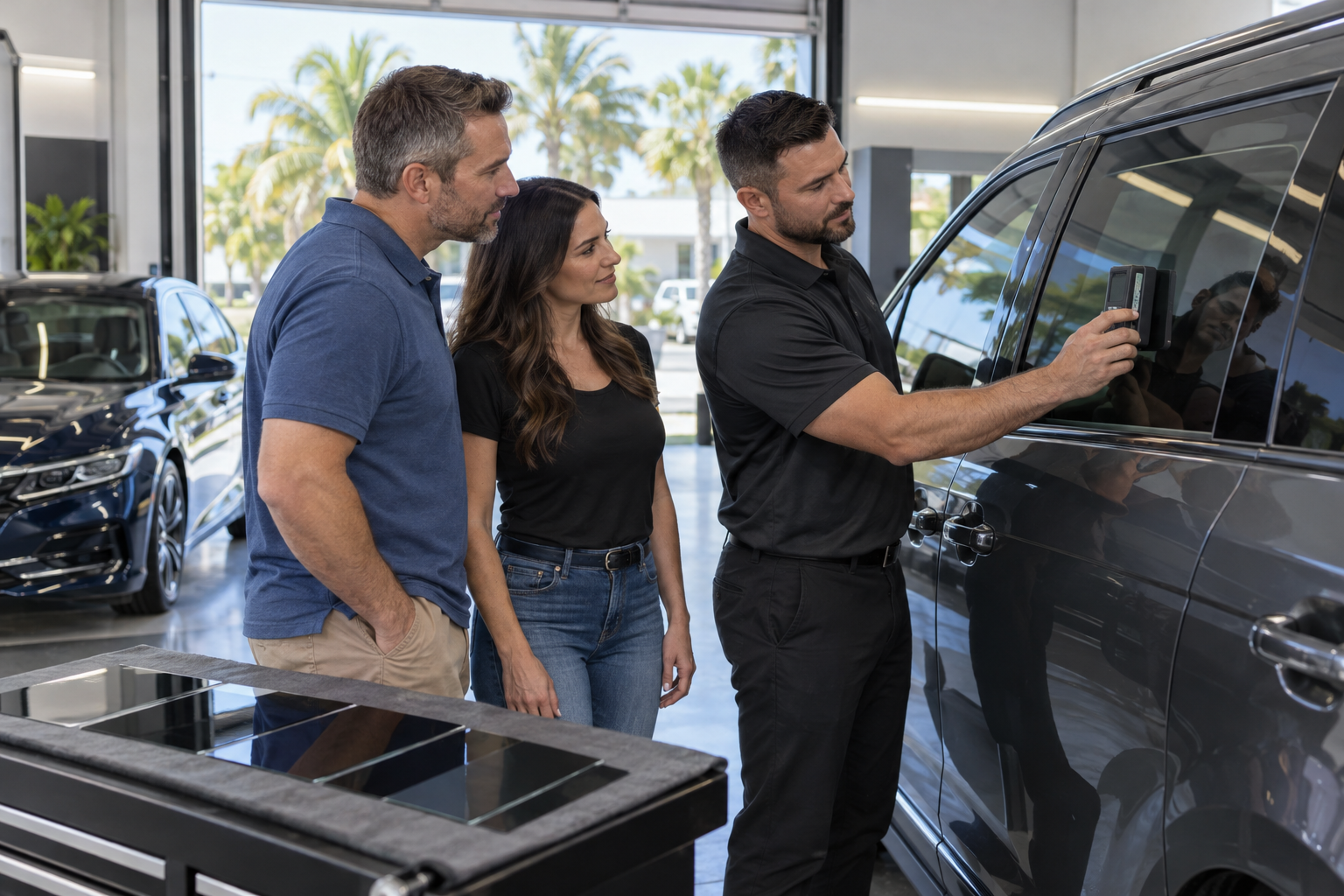
Florida’s limits apply to the combined result, not the film by itself. Placing a film labeled 30 percent VLT over glass that is already slightly tinted can produce a final reading below 30 percent. Professional installers meter the original glass before recommending a shade.
Windshield Tint Requirements
For most Florida vehicles, nonreflective tint is permitted along the top of the windshield above the manufacturer’s AS-1 line. This marking is usually located near the upper edge of the windshield and identifies the area where a sun strip may be installed.
Tint should not extend below the permitted area unless the driver has an applicable medical exemption. Keeping the main viewing area clear supports safe visibility and reduces the risk of a violation.
Reflectivity Also Matters
Compliance is not determined by darkness alone. Florida limits the front side windows to no more than 25 percent reflectivity and the rear side windows to no more than 35 percent reflectivity.
Highly mirrored films can produce glare for other motorists. Drivers seeking strong solar protection can instead choose modern films designed to reject heat and ultraviolet rays without an excessively reflective appearance.
Why Sedans Have Different Rear Window Limits
Florida generally treats sedans as passenger cars. Their front side windows must allow more than 28 percent of visible light through. Rear side windows and the rear window must allow more than 15 percent through. This permits darker rear tint than front tint, but not as dark as the limit available to many multipurpose vehicles.
These limits depend on the vehicle’s legal classification, not the owner’s description. A four-door vehicle with a trunk is commonly a passenger car, but the manufacturer’s classification should be checked when there is uncertainty.
Rear Visibility and Side Mirrors
When rear glass is tinted, Florida requirements concerning rear visibility and side mirrors must also be considered. Properly functioning mirrors help drivers monitor surrounding traffic when visibility through the back glass is reduced.
The darkest legal shade is not ideal for every sedan. Nighttime driving, interior color, factory glass, weather conditions, and the driver’s vision can affect how dark a film appears from inside.
How SUVs and Trucks Qualify for Darker Rear Tint
Many SUVs, pickup trucks, and similar vehicles are classified as multipurpose passenger vehicles. Their front side windows must still allow more than 28 percent of visible light through, but qualifying rear side windows and rear glass may be darker than those on passenger cars.
This distinction matters when adding film to factory privacy glass. SUVs and trucks often leave the factory with dark rear glass, but that glass may provide less heat rejection than quality automotive window film.
Vehicle Shape Does Not Always Determine Classification
A vehicle that looks like a compact SUV does not automatically receive the same allowance as a pickup or traditional sport utility vehicle. Crossovers, hatchbacks, and specialty models may be classified differently based on their design and manufacturer documentation.
Before selecting rear tint, the installer should verify whether the vehicle is identified as a passenger car or multipurpose passenger vehicle.
Florida Tint Limits by Vehicle Type
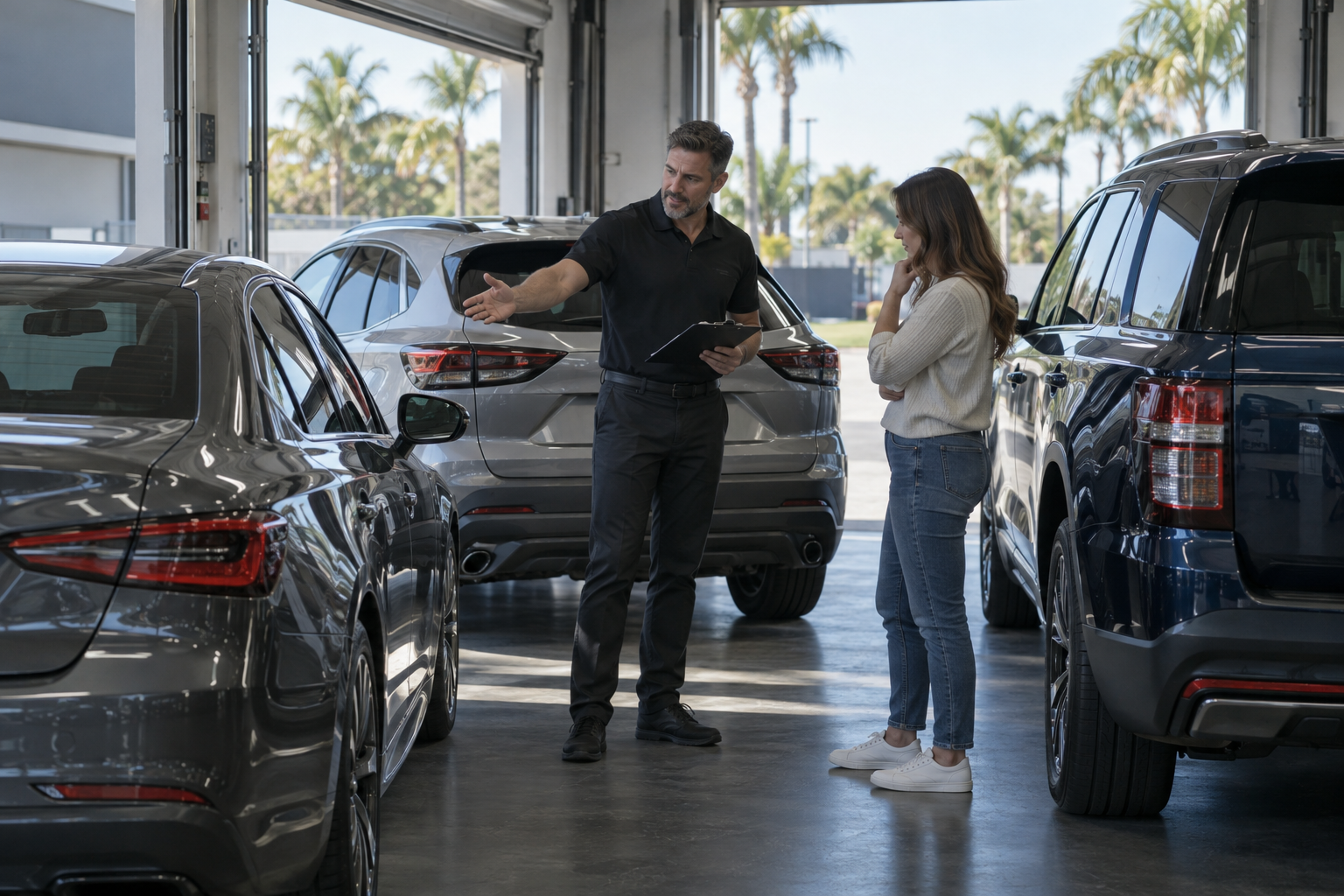
The main difference between sedans and multipurpose passenger vehicles appears behind the driver. Front side window requirements are generally the same, while qualifying SUVs and trucks may have darker rear windows.
Passenger Cars and Sedans
Windshield: Nonreflective tint may be installed above the manufacturer’s AS-1 line.
Front side windows: The completed window must allow more than 28 percent of visible light through.
Rear side windows: The completed window must allow more than 15 percent of visible light through.
Rear window: The completed window must allow more than 15 percent of visible light through.
SUVs, Trucks, and Multipurpose Passenger Vehicles
Windshield: Nonreflective tint may be installed above the manufacturer’s AS-1 line.
Front side windows: The completed window must allow more than 28 percent of visible light through.
Rear side windows: The completed window must allow more than 6 percent of visible light through.
Rear window: The completed window must allow more than 6 percent of visible light through.
These percentages describe visible light passing through the completed window assembly. They are not film labels that can be applied to every vehicle without first measuring its glass.
Practical Examples of How the Rules Apply
A Sedan With Clear Factory Glass
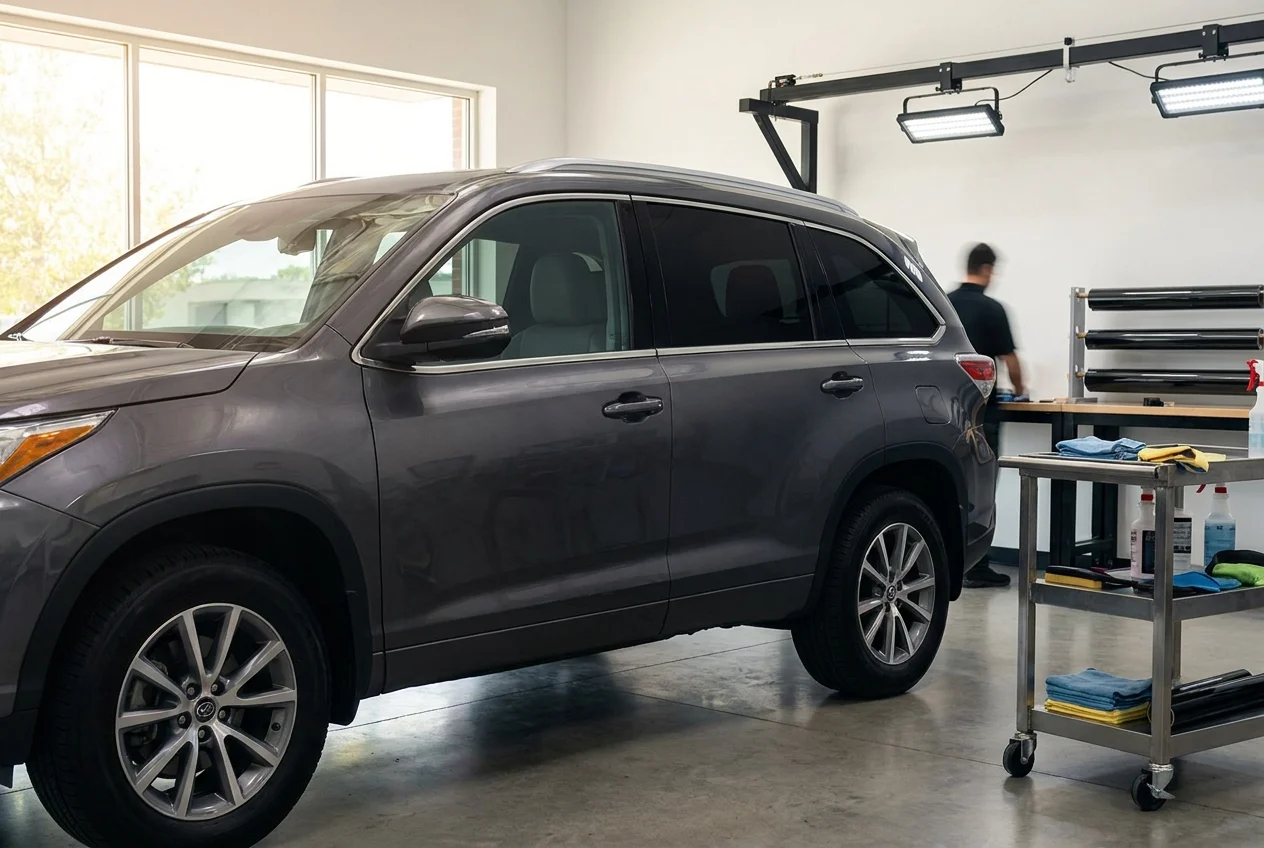
Consider a sedan with front side glass measuring approximately 75 percent VLT before installation. Applying film labeled 35 percent VLT will not necessarily create a finished 35 percent reading. The installer must account for light already absorbed by the glass and keep the completed front window above Florida’s threshold.
An SUV With Factory Privacy Glass
An SUV may have dark privacy glass behind the front doors. If that glass is already near the legal minimum, adding dark film could move the finished result below the applicable limit.
The front windows remain subject to the same general VLT requirement as a sedan. Matching them to very dark rear privacy glass may not be legally possible, so compliance should take priority over an exact visual match.
A Pickup With a Tinted Rear Window
A qualifying pickup may use darker rear-window tint than a sedan. However, the driver still needs adequate awareness when towing, reversing, changing lanes, or driving at night.
Factory Privacy Glass Is Not the Same as Window Film
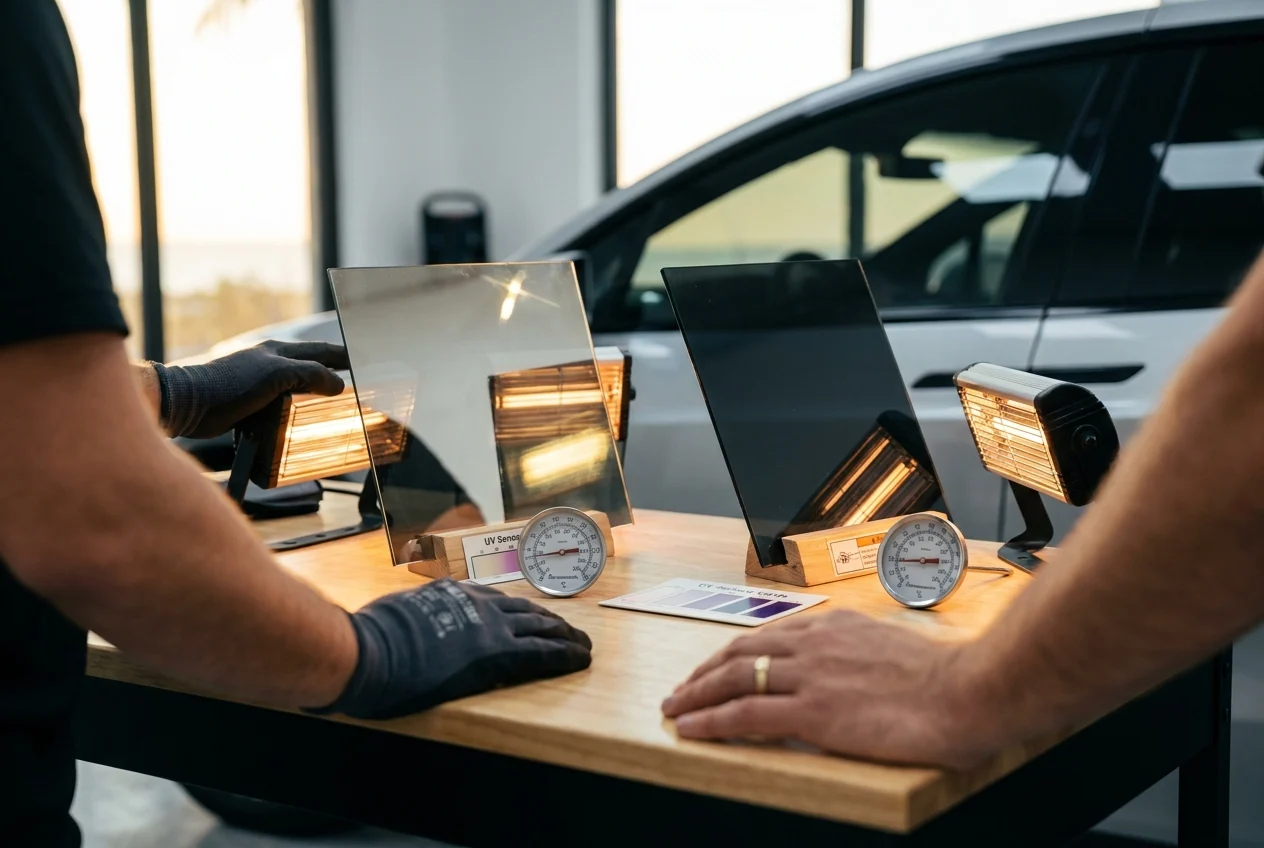
Factory privacy glass is made by adding pigment during manufacturing. It reduces visible light and creates a darker appearance, but it does not always provide the solar performance of high-quality aftermarket film.
Automotive film can add ultraviolet protection, glare reduction, and infrared heat rejection. These benefits are valuable in Port Charlotte and throughout Southwest Florida, where vehicles regularly face intense sunshine and high cabin temperatures.
Adding film over privacy glass requires careful planning because both products affect the final VLT. A professional meter reading helps determine whether additional film is appropriate and which shade can improve performance without making the glass unnecessarily dark.
Why Heat Rejection Should Not Be Judged by Darkness
The darkest film does not always provide the greatest heat reduction. Film technology plays a major role in solar performance. A lighter ceramic film can reject significant heat while maintaining clearer visibility and a compliant VLT level.
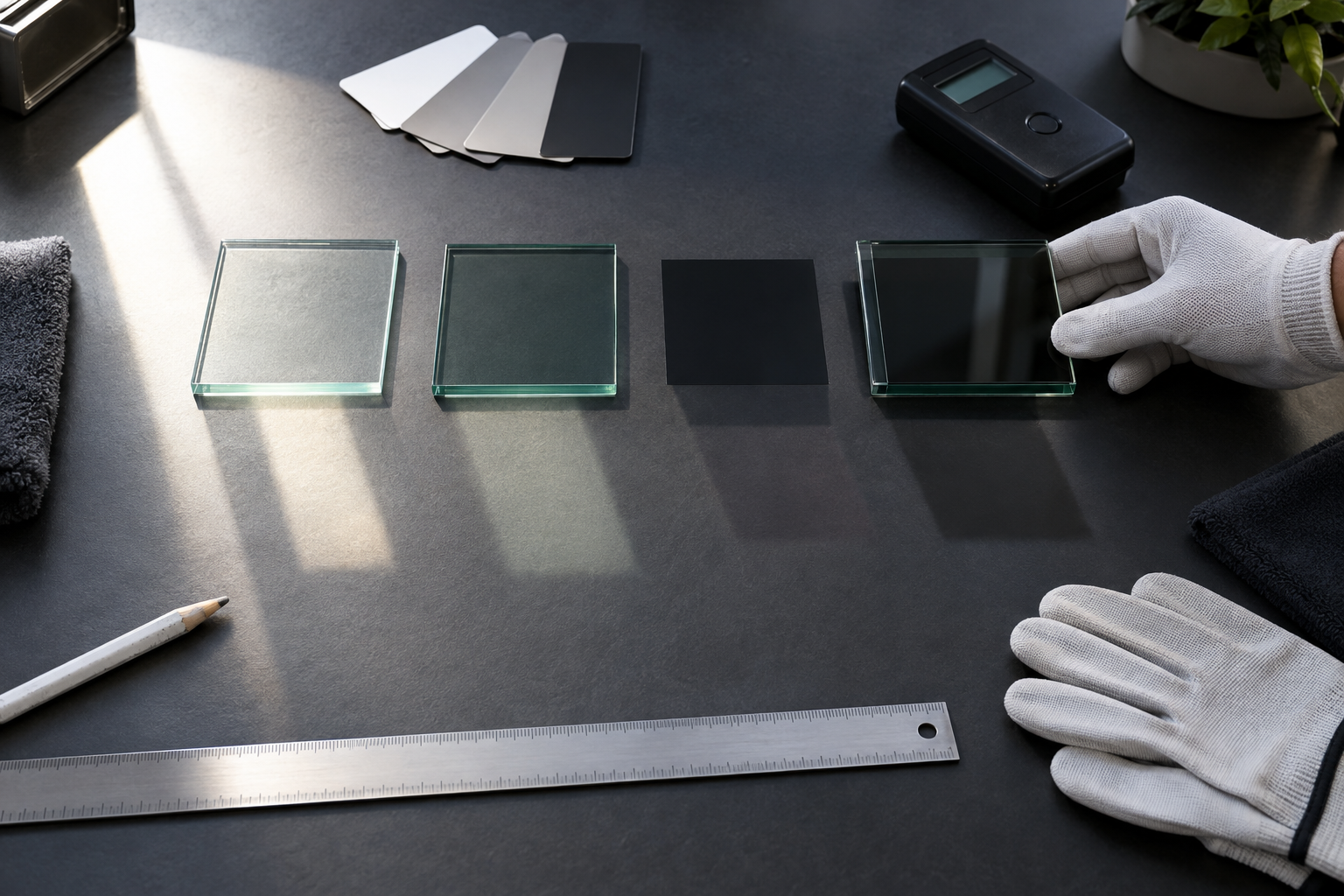
This is particularly helpful for front side windows, where Florida requires a lighter result than may be allowed behind the driver. Instead of selecting excessively dark film, drivers can choose premium ceramic products engineered to reduce infrared energy and ultraviolet exposure.
Useful specifications include total solar energy rejection, ultraviolet rejection, glare reduction, color stability, and optical clarity. These qualities influence long-term comfort and performance more than shade alone.
Common Florida Tint Compliance Mistakes
Choosing Film Based Only on Its Label
A film marked 30 percent VLT does not guarantee that the completed window will measure 30 percent. Factory glass absorbs some light before film is added.
Assuming Every Four-Door Vehicle Is a Sedan
The number of doors does not conclusively establish classification. A crossover may be classified differently from a sedan, while a hatchback resembling a small SUV may still be considered a passenger car.
Matching Front Windows to Rear Privacy Glass
Many SUV and truck owners want the front doors to match their dark factory rear glass. An exact match may require front film that is darker than Florida generally permits.
Ignoring Reflectivity
Tint can meet a darkness requirement and still be noncompliant if it is too reflective. Film selection must account for both VLT and reflectivity, especially with metallic or mirrored products.
Extending Tint Below the AS-1 Line
A deep windshield strip may reduce glare, but extending it below the permitted area can create visibility concerns and a potential violation. The AS-1 marking should be located before installation.
Medical Exemptions for Window Tint in Florida
Florida provides a process through which qualifying individuals with certain medical conditions may seek an exemption from standard restrictions. Approval is not automatic, and general sensitivity to sunlight does not necessarily qualify a driver.
Applicants should follow current state documentation requirements and keep the required proof in the vehicle after approval. Even with an exemption, practical visibility remains important. Film that is difficult to see through at night or during heavy rain can create serious safety concerns.
How Window Tint May Be Checked
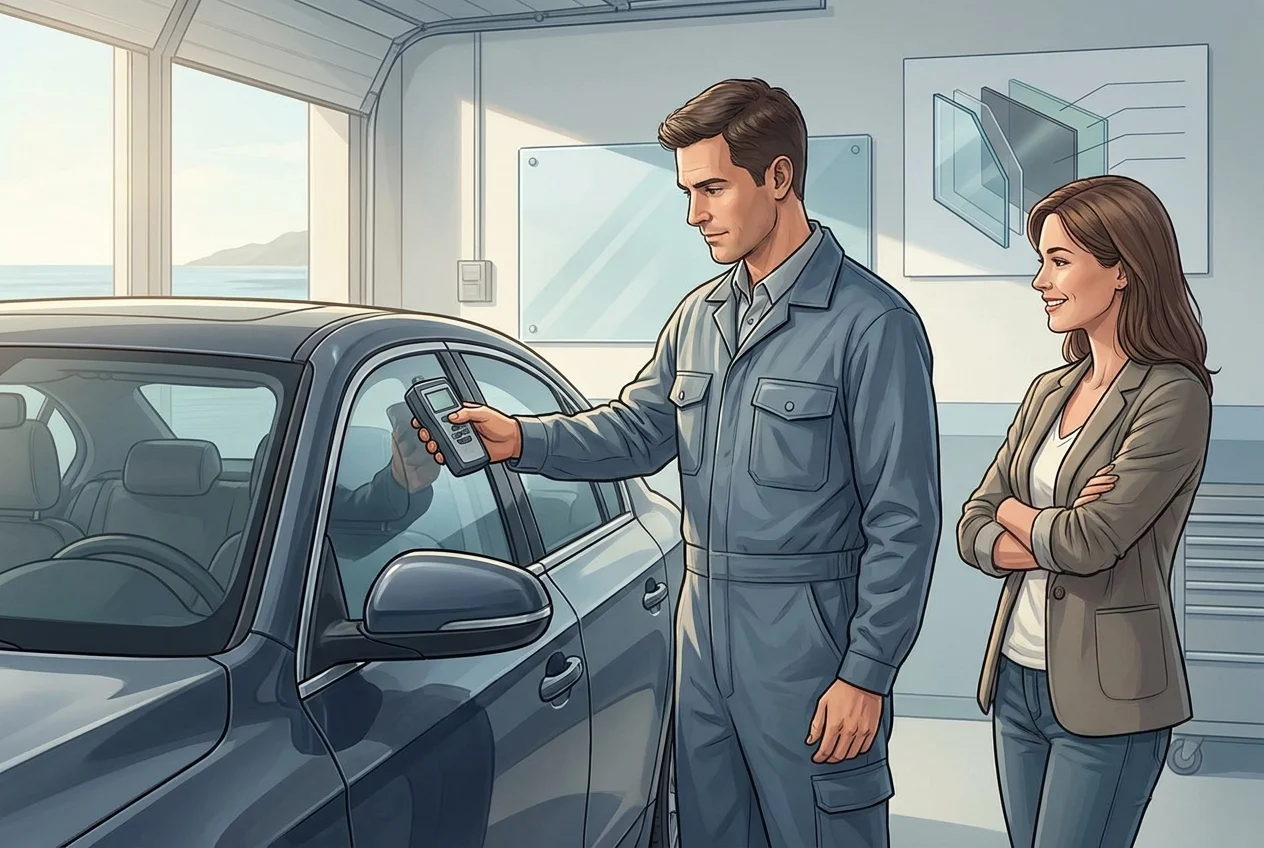
Law enforcement officers may use a tint meter to measure visible light passing through a window. Readings can vary slightly based on the meter, glass condition, installation, and testing procedure. Installers should therefore avoid targeting the legal threshold without a reasonable compliance margin.
A window that was compliant when installed can change if another film layer is added later. Replacing broken glass with a window that has different factory tint can also affect the reading. Vehicles with dark rear glass should have properly functioning side mirrors when required for rearward visibility.
Choosing Legal Tint for Florida Driving
The right film depends on vehicle classification, existing glass, window location, and the driver’s visibility needs. Each window should be measured before installation rather than evaluated by appearance alone.
A professional installer can recommend a compliant combination that improves heat rejection, glare control, privacy, and ultraviolet protection. For Southwest Florida drivers, quality ceramic film can deliver strong solar performance without requiring the darkest available shade.
Questions to Ask Before Installation
Confirm whether the vehicle is a passenger car or multipurpose passenger vehicle. Ask for the estimated finished VLT, verify compliance with reflectivity limits, and discuss how the selected shade may affect nighttime visibility.
Final Considerations for Sedans, SUVs, and Trucks
Florida generally applies the same front side window limit to sedans, SUVs, and trucks, but qualifying multipurpose vehicles receive a darker allowance behind the driver. The vehicle’s official classification and completed VLT reading ultimately determine which options are appropriate.
Starr Custom Tinting helps Port Charlotte drivers select premium automotive window film suited to Florida conditions and their specific vehicles. A careful, vehicle-specific installation can provide lasting comfort, privacy, style, and protection while helping drivers remain within applicable Florida tint requirements.
Need help with Legal Window Tint for SUVs, Trucks, and Sedans in Florida: What’s the Difference??
